Eco-friendly locations / The Most Beautiful Caves and Grottos of the World / Big Bone Cave, USA
Big Bone Cave, USA
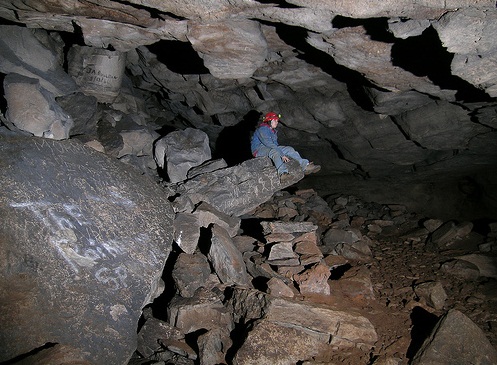
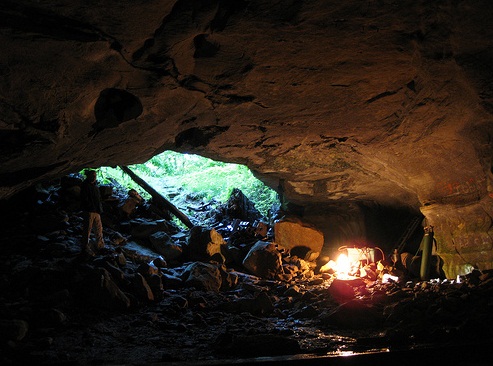
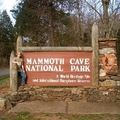
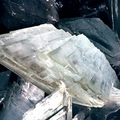
The Cave of Bones is a cave, located in the County of Van Baren, in Tennessee, which is known in the course of its history, and during the current recreational use. This cave is ranked among the National Register of Historic Places. The cave got its name due to the discovery of a giant sloth bones in 1811. The cave was managed as a mine saltpeter, especially during the War of 1812 and the American Civil War. The set of natural balances and human artifacts have been well preserved in a dry atmosphere in the cave. The Cave is the 7th to map as the longest cave of Tennessee. The Big Bone Cave has become known after the discovery of the skeleton of a giant sloth fossils in 1811. The skeleton is now in the collections of the Academy of Natural Sciences in Philadelphia. Later known discovery in 1971, it includes fossil bones of a large jaguar Pleistocene. The Big Bone Cave was used extensively by the Native Americans from about 3000 years ago to 1500 years ago. These people hunted medicinal salts and gypsum in the cave. The exact use of gypsum is not known, but it may have been used for some religious purposes. Other caves in the area were also used for the extraction of salt and gypsum, including the Mammoth Cave, Kentucky. Due to the extremely dry nature much of the Great Cave of Bones and some remarkable artifacts were found in the cave. These items would have increased rapidly in the surface areas. Especially numerous were the reed torches. Other artifacts found in the cave include woven moccasins, fragments of a pumpkin and a bag of woven fibers. Dried human feces are also numerous in the cave. They were originally located in the Grotto cavers Clayton County on December 13, 1981. This discovery led to a full archaeological study conducted between August 1984 and August 1985. Archaeological investigations continue into the cave up to the present. The Big Bone Cave was managed as a mine of saltpeter (the main component of gunpowder) from 1810 to 1815, and again during the American Civil War, around 1861 - 1863. The Big Bone Cave was probably the largest oil field and mining saltpeter place in the United States in the history. Mining ceased when Tennessee was occupied by federal troops. Because of the extremely dry nature of this cave, nitrate and exhibits are in a great state with respect to safety. There are many large tanks leaching squares below the air passages, known as "Skayvey" in this area. Also in this section there are wooden water pipes and wooden ladders. The forest has largely been placed in the cave during the Civil War. The area, known as "Musterground", is formed of five large, square-shaped tubs, which are also in a well-preserved condition. It is assumed that they date from the Civil War. However, there are many smaller V-shaped tanks that are in worse condition. It is assumed that they are older and date back to the war of 1812. In the cave there was another entrance at the far end Musterground, that was known as the entrance to the Cave of the Arch. There is a good reason to believe that this entry could have been destroyed during the earthquakes of New Madrid, which took place between December 16, 1811 and February 7, 1812. The Big Bone Cave, Tennessee, was acquired in 1974 and it is now a natural state area in the State Park. The current map shows large bone caves 9,627 miles (15.494 kilometers) .
Others from The Most Beautiful Caves and Grottos of the World



Do we know everything about this world? Of course not, and the most interesting thing is that we know a little about what is on the surface of this planet, but nothing is really aware of the fact of what is at the bottom, below the surface.
But underground there are many wonderful things, in particular, the caves, which keep their secrets from us humans.
I want to present to you, dear readers, the most interesting and the most beautiful caves of our world.
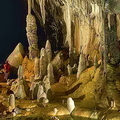
From childhood we are taught that there are caves with stalactites and stalagmites that have formed over centuries, millennia draining down water - drop by drop, and on the ceiling and the floor of the cave gradually formed tumors by mineral particles contained in water.
Caves are subterranean voids that were formed by leaching of soft rocks, tectonic processes, etc.
There is unique fauna in the caves, which members have developed other ways of feeling and movements due to the absence of light.
Each cave is a special world, where you can see its beauty.
Thus, the Onogonda Caves from Missouri and the Red Flute Cave of Canada are known for their stalactites and stalagmites.
The last was named so because the whole cave has excellent acoustic properties, and despite its length of 240 meters, the flute is perfectly audible from end to end.
There also are icy caves where there is plenty of both ice and fire.
The ceilings of some caves are completely covered with ice, and at the bottom some lava flows.
Such caves can be found in Vietnam, Scotland and Norway, respectively.
Cavity: the real meaning of peace Cavities are formed by water, which create enormous empty spaces below the surface, washing out the breed for millennia.
Few countries can boast such caves, the cave Deer, known as the longest mall in the world.
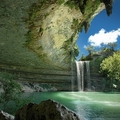
A closer example, the Hugden Grotto, known for its waterfalls and in Slovenia Skocjan equally beautiful and frightening.
Man slightly ennobled them, sheds and bridges were conducted under ground electricity, but it further emphasizes the wild nature of these caves.
Morokkan cave in North Africa is probably the most unusual and beautiful cave in the world.
The thing is that in the vault of this cave is a hole, through which the sun looks periodically.
People took it as marked by God for a long time because what else enters the cave beside the sun? Caves are places of mystery, paradox and beauty.
Find out which are the most amazing and famous caves and grottos in the world created by nature.
Images of Big Bone Cave, USA, icons, photos, figures, visions, appearances, illustrations, snapshots, captures, canvas and pictures of Big Bone Cave, USA - The Most Beautiful Caves and Grottos of the World